
Sambalpuri Ikat
The pattern is planned into the thread, before it ever touches the loom.
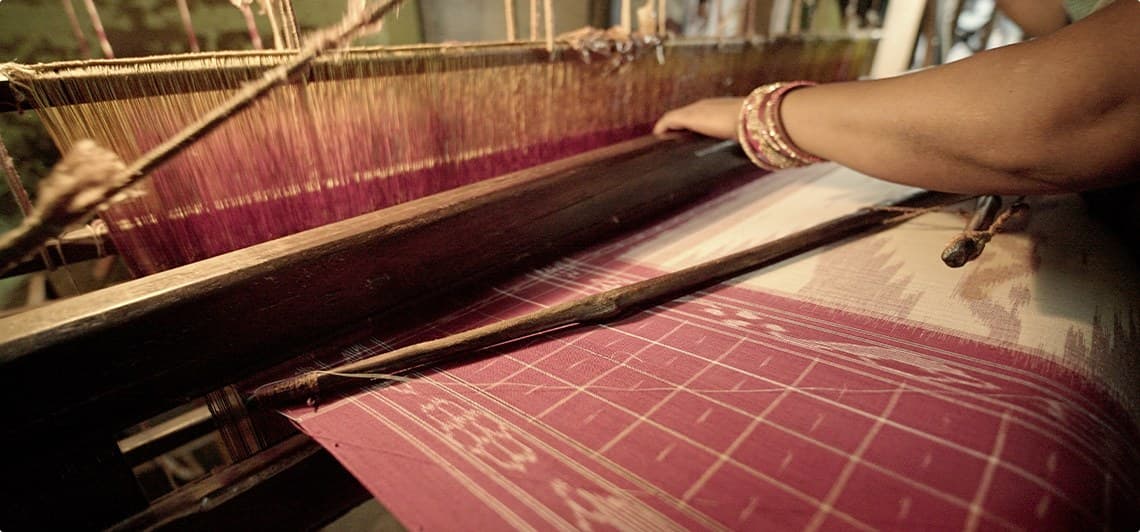
Some fabrics are printed. Some are woven. And some are created thread by thread, long before they ever reach the loom. Sambalpuri Bandha belongs to the latter.
A treasured handloom tradition from Western Odisha, Sambalpuri is known for its distinctive tie-and-dye technique, intricate motifs and vibrant yet deeply rooted visual language.
For generations, skilled weavers have transformed simple yarn into textiles that carry stories of nature, culture, faith and everyday life.
At Odrayan, this heritage is not something we simply admire. It is something we want to bring into the modern wardrobe.
Sambalpuri handloom is deeply rooted in the weaving communities of Western Odisha, with important weaving centres across Sambalpur, Bargarh, Barpali, Sonepur and surrounding regions.
Here, weaving is more than a craft. It is a tradition passed from one generation to another.
The knowledge of preparing yarn, creating patterns, choosing colours and operating the handloom has travelled through generations of weaving families.
The result is a textile that carries something very special: the identity of the place where it was made.
The pattern begins before the fabric does.
The word Bandha refers to the traditional tie-and-dye technique used to create Sambalpuri designs.
Unlike a printed fabric, where a design is added to an already woven surface, Sambalpuri Bandha creates the design within the yarn itself, before weaving begins.
Sections of yarn are carefully tied to resist the dye. The yarn is then dyed, untied and prepared again. For more intricate designs, this process can be repeated with different colours.
Only then does the prepared yarn go onto the handloom. As the warp and weft come together, the design gradually reveals itself.
The fabric is not printed with the story. The story is woven into it.
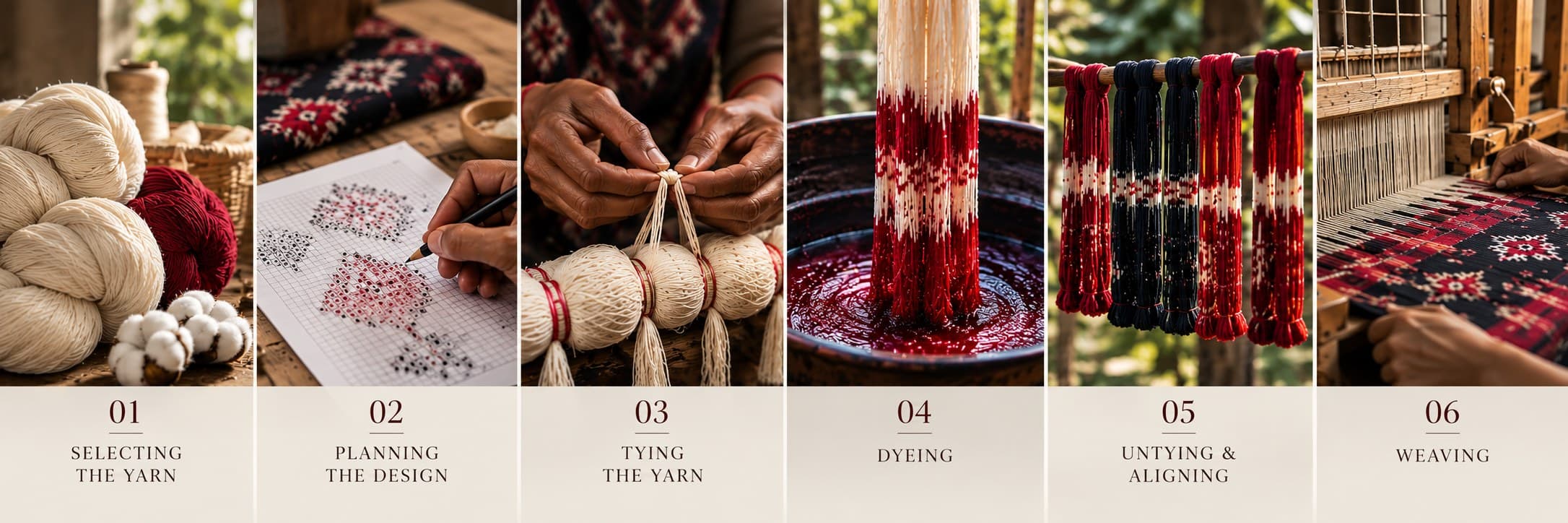
- 01
Selecting the Yarn — The process begins with carefully selected yarn appropriate to the desired textile. The yarn influences the final texture, strength, drape and character of the fabric.
- 02
Planning the Design — The desired motif and colour arrangement are translated into a precise yarn pattern. This requires the weaver to visualise how the design will appear once the yarn is woven.
- 03
Tying the Yarn — Selected sections are tightly bound using thread. These tied portions protect the yarn from absorbing the dye. This is the foundation of the Bandha technique.
- 04
Dyeing — The yarn is immersed in colour. Protected sections remain undyed while exposed areas absorb the colour. For complex patterns, the tying and dyeing process may be repeated several times.
- 05
Untying & Aligning — The bindings are carefully removed. The coloured yarn is then arranged and aligned with precision so that the intended pattern can emerge during weaving.
- 06
Weaving — The prepared yarn finally reaches the handloom. Warp and weft come together, thread by thread, transforming the carefully prepared yarn into a finished textile. This is where the design comes alive.
One of the beautiful characteristics of Sambalpuri Bandha is that its patterns are created through the structure of the yarn rather than simply being applied to the surface.
This gives the textile its distinctive appearance and allows the design to be experienced from both sides of the fabric.
The subtle variations created during the handwoven process are part of its character. No two pieces need to look exactly alike.
And that is the beauty of something made by hand.
Sambalpuri textiles carry a rich vocabulary of traditional motifs.
These designs draw inspiration from the world around the weavers — from nature and animals to spiritual symbols and Odisha's cultural traditions.
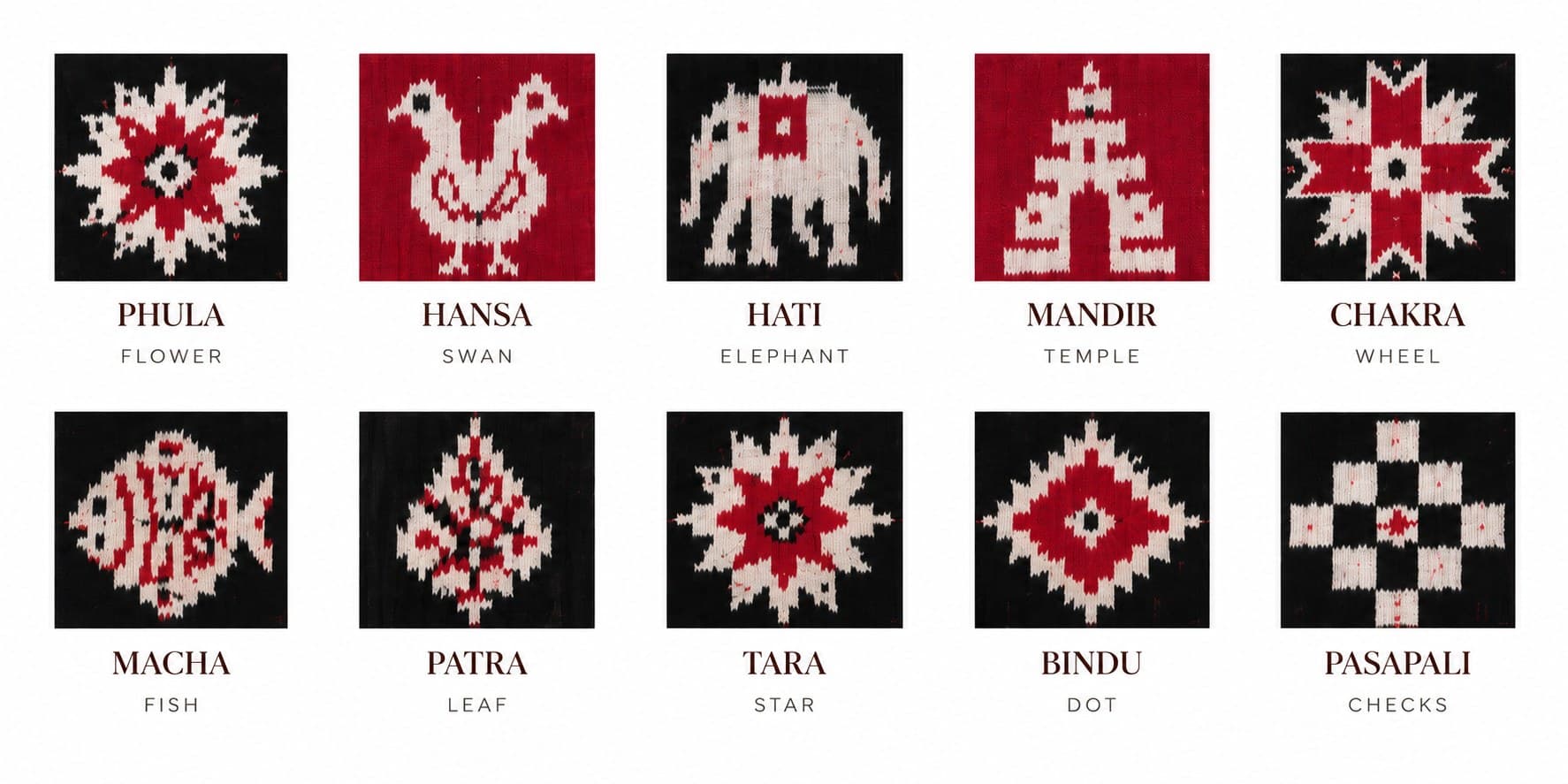
- Shankha (the conch) — A symbol associated with auspiciousness and spirituality.
- Chakra (the wheel) — Representing movement, continuity and a powerful symbol within Odisha's cultural heritage.
- Fish — A recurring traditional motif associated with abundance, prosperity and life.
- Tortoise — A motif found within the traditional design vocabulary of Odisha's textiles.
- Flowers & Creepers — Inspired by nature, representing beauty, growth and continuity.
- Traditional & Temple-Inspired Forms — Geometric and architectural influences reflecting Odisha's distinctive artistic and cultural landscape.
These motifs are more than decoration. They are fragments of a visual language carried forward through generations.
Sambalpuri handloom is often recognised through its iconic sarees, but the craft extends far beyond them. Its textiles have found expression in:
- —Sarees
- —Dress Materials
- —Dupattas
- —Stoles
- —Shirts
- —Home Textiles
- —Contemporary Apparel
Today, traditional handloom is finding new possibilities in modern fashion. And this is where Odrayan begins its journey.
At Odrayan, we believe heritage should not be confined to a museum or reserved for special occasions. It should be lived in.
We explore Odisha's handwoven textiles through contemporary silhouettes, modern proportions and thoughtful design.
A traditional weave can become a blazer. A familiar motif can become a subtle statement. A heritage textile can become something you wear to work, to dinner, or simply because you love it.
We do not want to erase the traditional identity of the textile. We want to create new ways for it to be seen.
The heritage stays. The expression evolves.
Sambalpuri Bandha Saree & Fabrics is a Geographical Indication (GI) registered product associated with Odisha's distinctive handloom heritage.
The GI recognition acknowledges the unique connection between the textile, its geographical origin and the traditional skills associated with its production.
For us, this represents something deeper than a certification. It represents the relationship between land, craft, community and generations of knowledge.
Handloom carries something that mass production cannot quite reproduce.
A slight variation in alignment. A tiny difference in colour. A subtle change in texture.
These details are not flaws. They are fingerprints of the craft. They remind us that a person was involved in creating what you are wearing.
Someone prepared the yarn. Someone tied the threads. Someone worked with colour. Someone sat at the loom. And someone carried forward a skill learned from generations before them.
We choose Sambalpuri because it represents the kind of fashion we believe in.
Rooted, yet relevant. Traditional, yet evolving. Handcrafted, yet contemporary.
It gives us the opportunity to celebrate Odisha's textile heritage while creating clothing for the woman of today.
A woman who may carry a laptop to work in the morning, meet friends in the evening and still want what she wears to feel distinctly her own.
That is the space we want Odrayan to inhabit.
Every Odrayan piece begins with respect for where the textile comes from.
From the weaving traditions of Western Odisha. From the hands that prepare the yarn. From the patterns that have travelled through generations. And from a belief that beautiful heritage deserves to be seen in new ways.
We are building a bridge between where the textile comes from and where fashion is going.
Because preserving a tradition does not always mean keeping it unchanged. Sometimes, it means giving it a new reason to be worn.
Sambalpuri is not simply a fabric. It is a process. A place. A community. A memory. A skill. And a story woven into every thread.
At Odrayan, we are beginning our own chapter in that story — taking something deeply rooted in Odisha, and creating something that belongs in the world of today.
Threads of Heritage, Made for Today.
Odrayan by Mahi